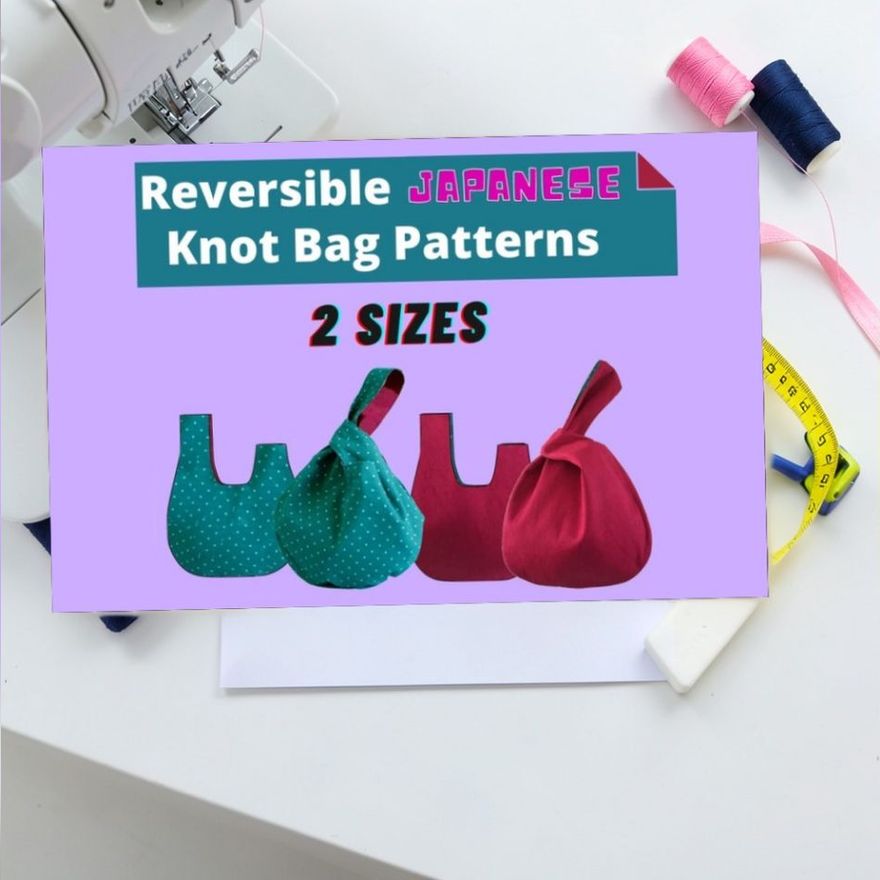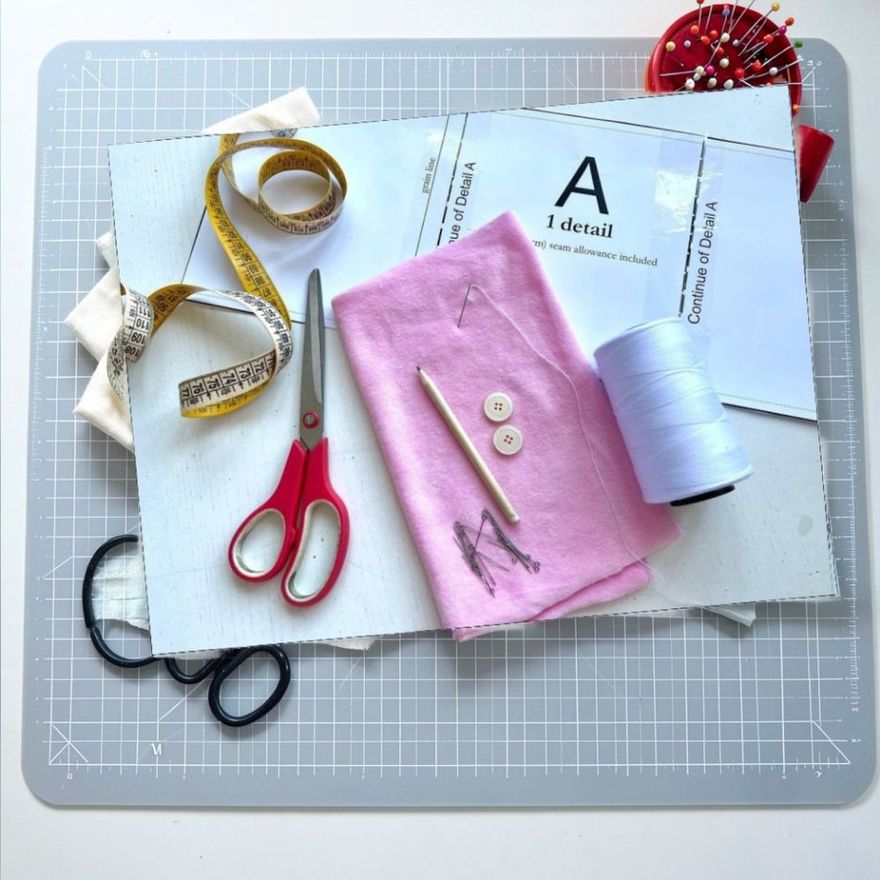
The quickest way to use up fabric scraps is to sort them by size and match each size to a project that fits it. Tiny pieces become key fobs and sachets, squares become coasters and pincushions, long strips become scrunchies and bunting, and anything close to a fat quarter (the 18 x 22 in quilt-shop cut) becomes a pouch or a small bag. Here are fourteen projects arranged that way.
Match the Project to the Scrap
| Scrap size | What it makes |
|---|---|
| Under 5 in (13 cm) in any direction | Key fobs, corner bookmarks, lavender sachets, covered buttons |
| Squares of 5 to 8 in (13 to 20 cm) | Coasters, pocket tissue holders, pincushions, gift card envelopes |
| Long strips, 3 in (8 cm) wide or more | Scrunchies, bunting, twist headbands |
| Pieces of 10 in (25 cm) and up | Zipper pouches, patchwork pot holders, lined drawstring bags |
Sizes below are typical, not fixed. Scrap sewing is flexible by nature: if your piece is half an inch short, make the project half an inch smaller.
Tiny Pieces: Under 5 Inches
1. Key fobs. Cut a strip four times the width of your key fob hardware and 10 to 13 in (25 to 33 cm) long: 4 in wide for 1-inch hardware. The longer length makes a loop that slips over a wrist. Fold the long edges to the center, fold in half again, and topstitch both edges. A strip of fusible interfacing inside gives it body. Loop it and clamp the hardware over the raw ends.
2. Corner bookmarks. Three squares of about 4 in (10 cm) make one. Fold one square on the diagonal to form the pocket, sandwich it between the other two with right sides together, sew around leaving a gap, turn and press. The triangle slips over the corner of a page.
3. Lavender sachets. Two 4-inch squares, sewn on three and a half sides, turned, filled with a few tablespoons of dried lavender and stitched shut. Use a short stitch length, around 2 mm, so the buds cannot work their way out through the seam.
4. Covered buttons. A cover-button kit turns a circle of fabric into a matching button. The kit's packaging has a template for the circle size. Light and medium cottons work best; thick or piled fabric keeps the two halves from snapping together, and a sheer one needs a lining so the metal does not show through.
Squares of 5 to 8 Inches
5. Coasters. Two 5-inch (13 cm) squares and one square of cotton batting or fusible fleece. Stack the batting, then the two fabrics right sides together, sew around with a 1/4 in seam leaving a gap, turn, press and topstitch close to the edge. They finish at about 4.5 in (11.5 cm).
6. Pocket tissue holders. Two rectangles of roughly 6 x 7 1/2 in (15 x 19 cm), one outer and one lining, make a sleeve for a travel pack of tissues, which is about 4 x 2 x 1 in (10 x 5 x 2.5 cm). It is a ten-minute project and a good way to use a print you only have a little of.
7. Pincushions. Two 5-inch squares, sewn and turned, stuffed firmly and closed by hand. Polyester fiberfill works. So do your smallest fabric trimmings, cut up fine, which is a tidy end for scraps too small for anything else.
8. Gift card envelopes. A small lined envelope with a flap, closed with a snap or a button, sized to hold a card. It turns a plastic gift card into something that looks like a present.
The gift card envelope and the next two strip projects have ready-made patterns, if you would rather not work out the measurements yourself.
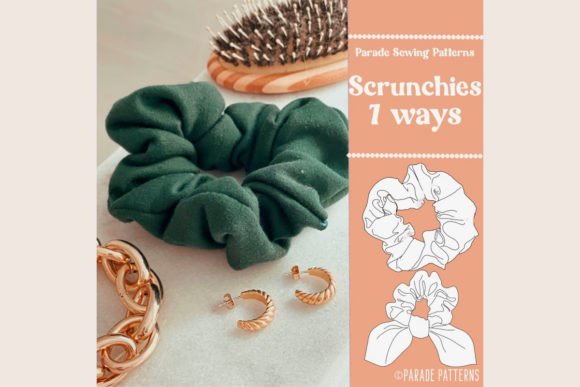
Easy Scrunchie Sewing Pattern
See the listing ↗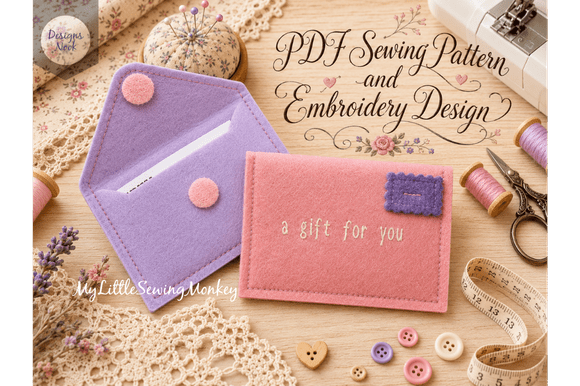
Gift Card Envelope - PDF Sewing Pattern
See the listing ↗
Twist Knot Headband Sewing Pattern
See the listing ↗From the collection Sewing Patterns. New Creative Fabrica members get 10 free downloads, and any of these can be one of them.
Long Strips
9. Scrunchies. A strip 3 to 4 in wide and 18 to 22 in long (8 to 10 cm by 46 to 56 cm) and 8 to 9 in (20 to 23 cm) of 1/4-inch elastic. If no scrap is long enough, join two or three shorter strips end to end first. The gathers hide the joins.
10. Bunting. Cut triangles about 7 in (18 cm) wide at the top and 8 in (20 cm) tall. Sew them in pairs, right sides together, along the two long sides, then turn and press. Slip the top edges into double-fold bias tape, leaving a small space between flags and a tail at each end for tying, and stitch along the tape. Mixed prints look better here than matched ones.
11. Twist headbands. These need knit scraps, such as the leftover from a T-shirt or leggings project, because the band has to stretch over the head. Cut with the stretch running along the length. Woven scraps will not work unless the pattern adds elastic.
Larger Leftovers: 10 Inches and Up
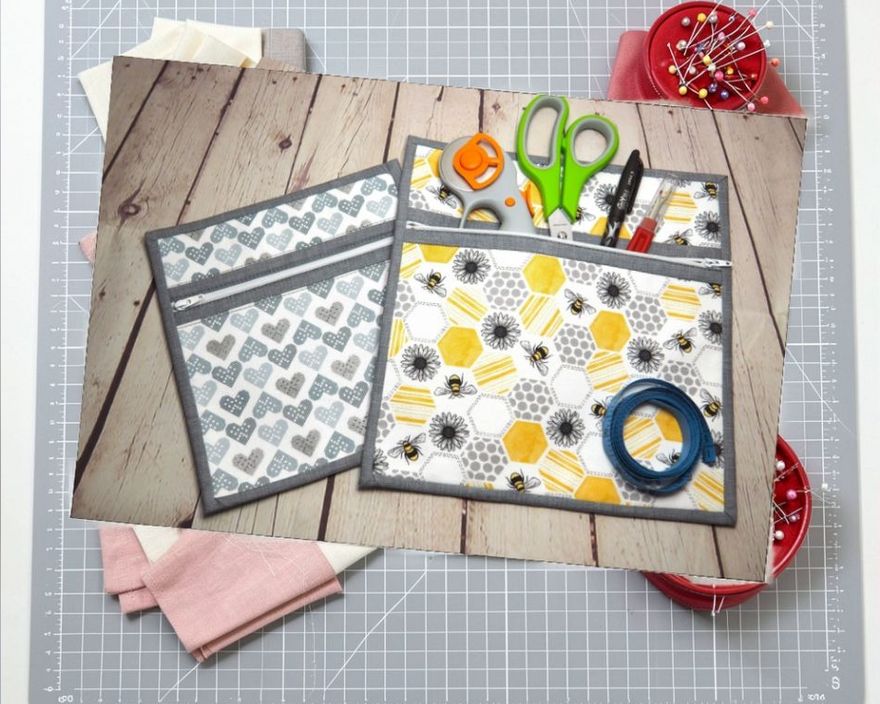
12. Zipper pouches. Two outer pieces and two lining pieces of roughly 9 x 6 in (23 x 15 cm), plus a nylon zipper at least as long as the top edge. Outer and lining can be different fabrics, so two modest scraps make one pouch. Patterns add what is harder to improvise: curved shapes, boxed bases and several sizes.

Flat Zipper Pouch
See the listing ↗
Malvern Zipper Pouch Pattern X 4 Sizes
See the listing ↗
Sewing Pattern Half-moon Zipper Pouch
See the listing ↗From the collection Pouches & Small Sewing Projects. New Creative Fabrica members get 10 free downloads, and any of these can be one of them.
13. Patchwork pot holders. Sew small squares or strips into an 8-inch (20 cm) block, layer it with batting and a backing, stitch through all the layers, and bind the edge. Use 100% cotton or linen for the fabric, the binding and the thread, because polyester can melt against a hot pan. For the filling, the usual choice is insulating batting made for kitchen items; Insul-Bright is the common brand. It is polyester fiber needled through a reflective film, so it belongs inside, between cotton layers, and many tutorials use it doubled or with a layer of cotton batting. Its maker says it is not for microwave use.
14. Lined drawstring bags. Two outer and two lining rectangles of about 10 x 12 in (25 x 30 cm) and two lengths of cord. The outer panels can be pieced from smaller scraps before you cut. These work as gift wrap, shoe bags and project bags.
For more shapes in this size range, see the pouches and small sewing projects collection.
Mixing Scraps in One Project
Combining fabrics is half the appeal, and a few rules keep the result from puckering or wearing unevenly.
- Keep weights similar. A pouch that joins canvas to cotton lawn pulls at the seam. Back lighter pieces with fusible interfacing to even things out.
- Keep wovens and knits apart. A stretchy piece sewn to a stable one ripples.
- Use only pre-washed fabric, or fabric you know has been washed. One unwashed piece can shrink and distort the whole item after the first wash.
- Check the fiber for anything that meets heat. Pot holders and coasters for hot mugs should be cotton or linen.
If you are unsure what a scrap is made of, the guide to fabrics for beginners describes how the common ones look and behave.
Sorting and Storing Scraps
A scrap pile gets used when you can see what is in it. Sort once, and then keep it sorted as you finish each project.
- Decide the smallest piece you will keep. For many sewists that is anything narrower than about 1.5 in (4 cm). Smaller bits go into a bag for pincushion stuffing.
- Sort by size first, color second. Four containers matching the table above are enough: tiny pieces, squares, strips, large leftovers.
- Press before storing. A flat scrap can be measured at a glance. A crumpled one looks smaller than it is and gets ignored.
- Trim odd shapes into rectangles when you have a few minutes. Cutting standard sizes, such as the 5-inch squares and 2 1/2-inch strips that quilt shops sell as charm packs and jelly rolls, means pieces are ready to sew.
- Keep knits, heavy fabrics and special fabrics in separate bags, labeled, so they do not get mixed into cotton projects.
Clear containers or zip bags work better than a lidded box. Fabric you cannot see does not get used.
Cutting Tools for Scraps
Scrap projects mean cutting many small, repeated shapes, and that is where a rotary cutter, a mat and a ruler save the most time. Pinking shears give woven scraps an edge that resists fraying.
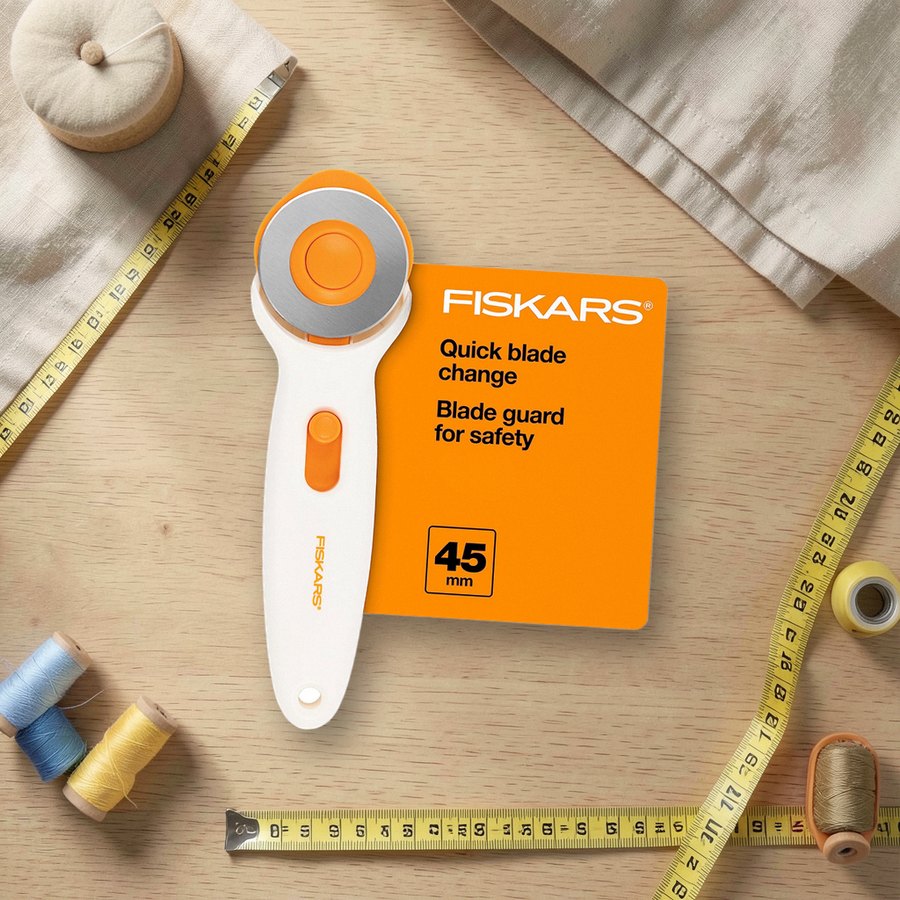 Rotary cutter, 45 mmFiskarsSee it on Amazon
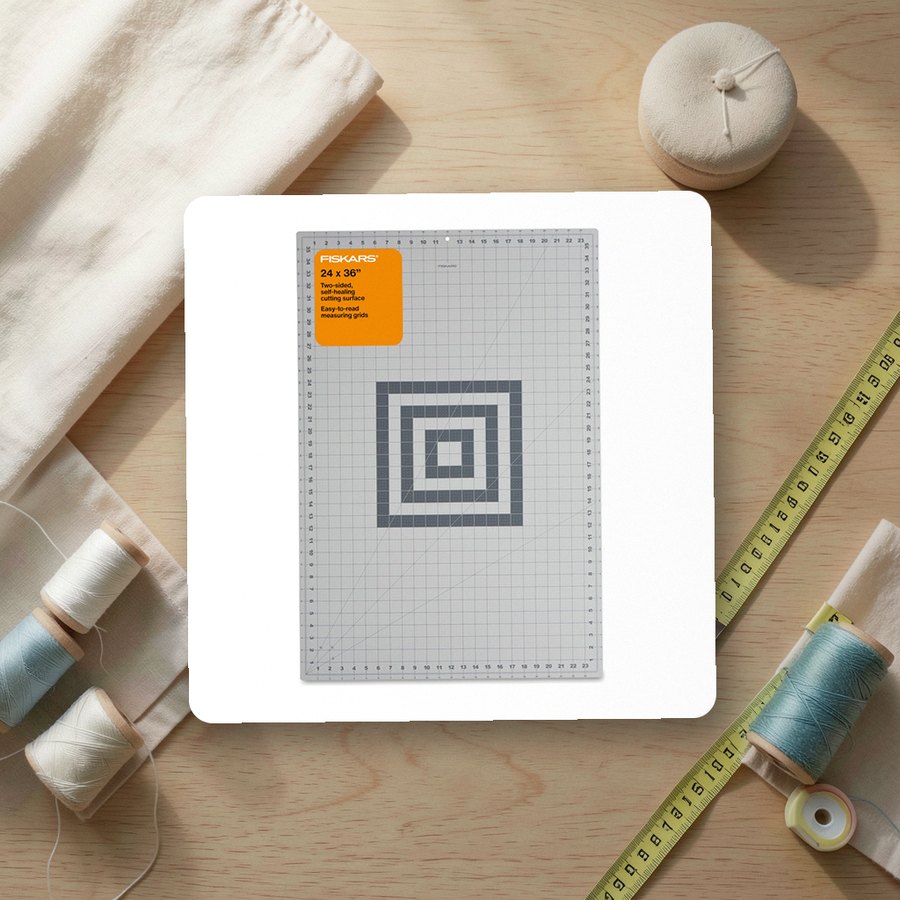 Self-healing cutting mat, 24 x 36 inchFiskarsSee it on Amazon
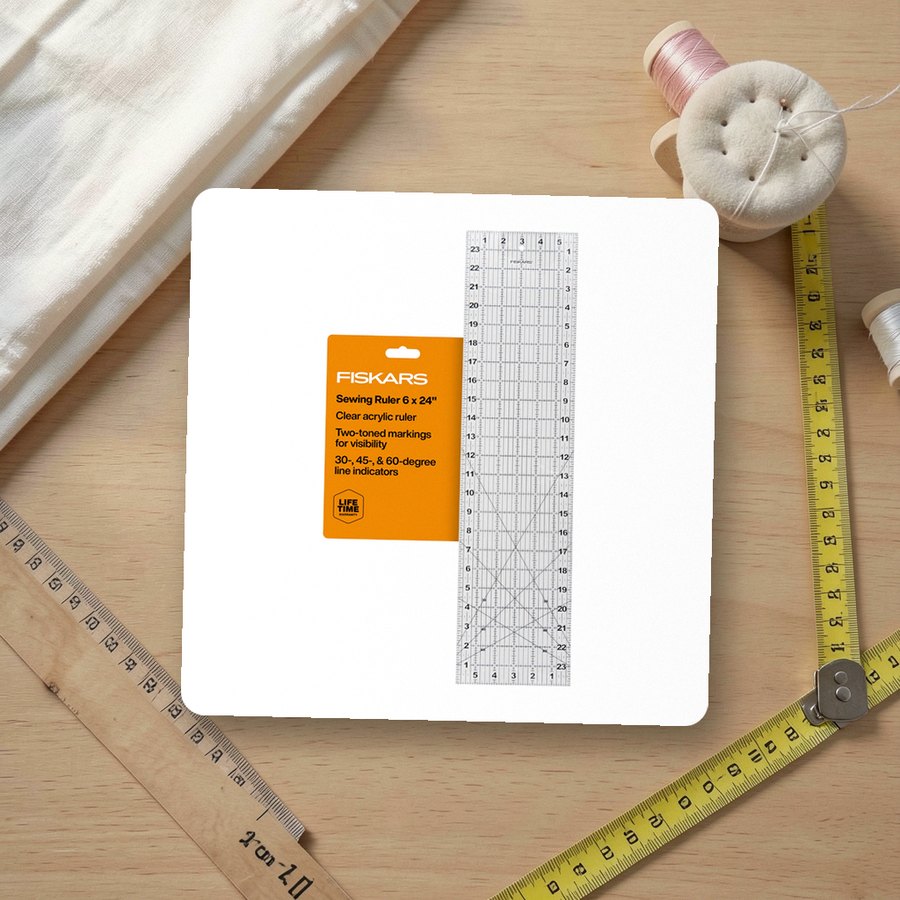 Clear acrylic ruler, 6 x 24 inchFiskarsSee it on Amazon
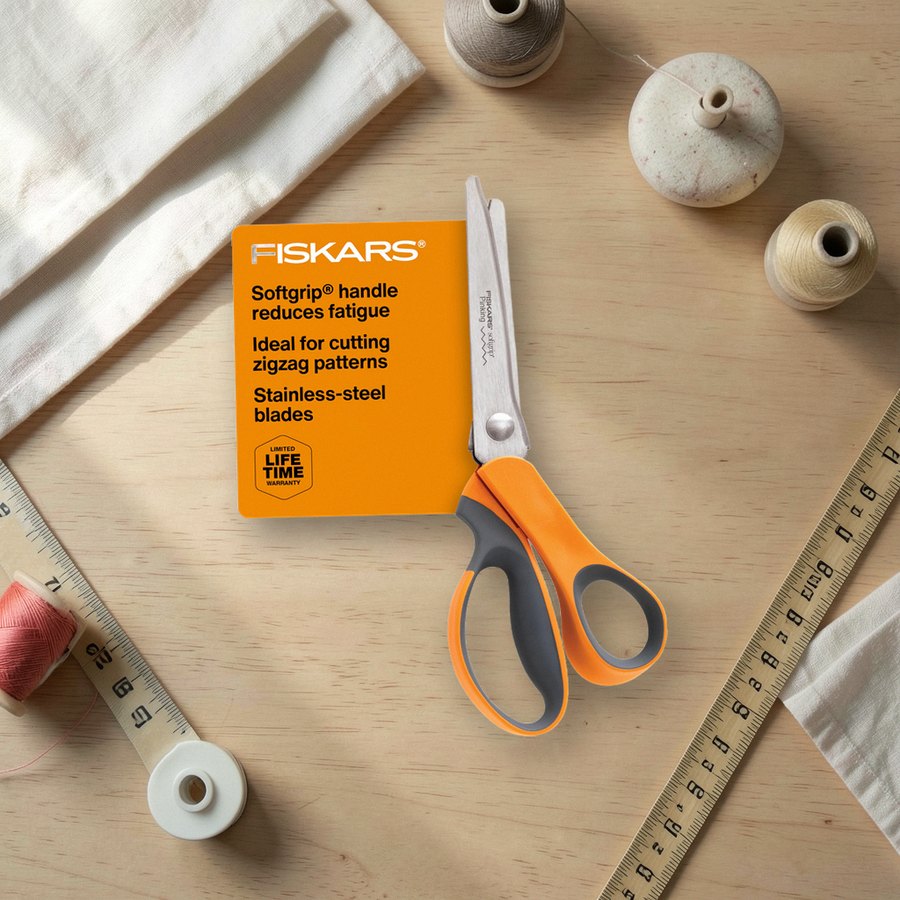 Pinking shears, 9 inchFiskarsSee it on Amazon
As an Amazon Associate we earn from qualifying purchases.
Start With What You Have Most Of
Look at which of the four containers is fullest and choose from that row of the table. A stack of squares is a set of coasters; a bag of strips is a string of bunting.
Many of these make good presents in small sets, and sewing gift ideas sorts handmade gifts by the time they take. If you are still learning the basics, sewing projects for beginners explains the scrunchie and the zipper pouch step by step.
Collections to Browse Next
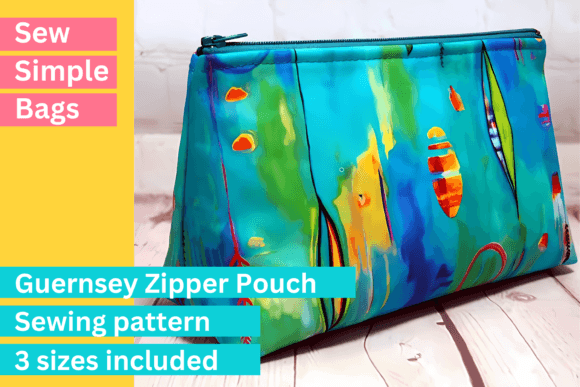 Pouches & Small Sewing Projects11 hand-picked · open the collection →Sewing Patterns13 hand-picked · open the collection →
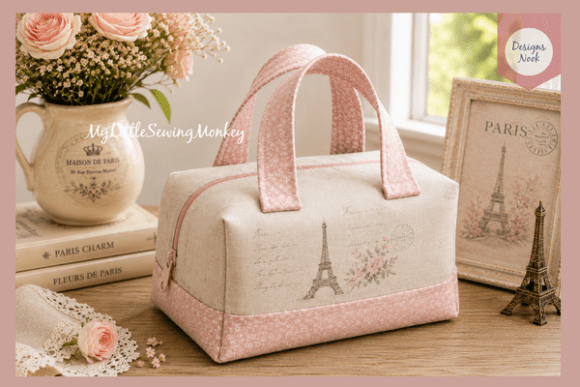 Bag & Purse Sewing Patterns13 hand-picked · open the collection →